Filter by

America's Longest War: The United States and Vietnam, 1950-1975 / George C. H…
The author portrays American participation in the Vietnam War as the logical culmination of the containment policy that began under Harry Truman in the late 1940's. Also his portrayal of the complex challenge that Vietnam posed for the United States and the varied responses it evoked from American people & leaders
- ครั้งที่จัดทำ
- 1
- ISBN/ISSN
- 0471015474
- ลักษณะวัสดุ
- xii, 298 p. : ill ; 21 cm.
- ชื่อชุด
- -
- เลขหมู่
- 959.7043373 H566A 1979

Vietnam: the ten thousand day war / Michael Maclear
- ครั้งที่จัดทำ
- 1
- ISBN/ISSN
- 0458951706
- ลักษณะวัสดุ
- x, 368 p. : ill., map ;24 cm.
- ชื่อชุด
- -
- เลขหมู่
- 959.7043 M163V
- ครั้งที่จัดทำ
- 1
- ISBN/ISSN
- 0458951706
- ลักษณะวัสดุ
- x, 368 p. : ill., map ;24 cm.
- ชื่อชุด
- -
- เลขหมู่
- 959.7043 M163V

War Comes to Long An; revolutionary conflict in a Vietnamese Province / Jeffr…
Content : - The physical setting - Long An at peace, 1954-1955 - Preparations for war, 1956-1959 - War comes to Long An, 1960-1965 - Lessons from Long An : an analytic review - Ignoring the lessons : the American war in Long An - From war to what?
- ครั้งที่จัดทำ
- 1
- ISBN/ISSN
- 0520023617
- ลักษณะวัสดุ
- xiii, 299 p. : ill., maps ; 24 cm
- ชื่อชุด
- -
- เลขหมู่
- 959.7043 R118W
The Road from War; Vietnam 1965-1970 / Robert Shaplen
- ครั้งที่จัดทำ
- 1
- ISBN/ISSN
- -
- ลักษณะวัสดุ
- 454 p. : maps ; 21 cm
- ชื่อชุด
- -
- เลขหมู่
- 959.7043 S529R
- ครั้งที่จัดทำ
- 1
- ISBN/ISSN
- -
- ลักษณะวัสดุ
- 454 p. : maps ; 21 cm
- ชื่อชุด
- -
- เลขหมู่
- 959.7043 S529R
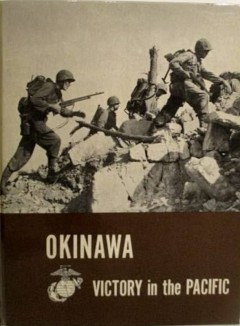
Okinawa : Victory in the Pacific / Major Chas. S. Nichols and Henry I. Shaw
- ครั้งที่จัดทำ
- 1
- ISBN/ISSN
- -
- ลักษณะวัสดุ
- viii, 332 p. : ill., maps ; 26 cm
- ชื่อชุด
- -
- เลขหมู่
- 940.54 N616O
- ครั้งที่จัดทำ
- 1
- ISBN/ISSN
- -
- ลักษณะวัสดุ
- viii, 332 p. : ill., maps ; 26 cm
- ชื่อชุด
- -
- เลขหมู่
- 940.54 N616O

On Strategy : a critical analysis of the Vietnam War / Harry G. Summers, Jr.
What went wrong in Vietnam? Applying the principles of war (based on the classic On War by Carl von Clausewitz) to the actual conduct of the fighting in Vietnam, the author provides some cogent answers to this question. It is not possible to do justice to the comprehensive nature of this author's arguments in a summary. However, among the points he raises are: the differences between the civili…
- ครั้งที่จัดทำ
- 1
- ISBN/ISSN
- 0891411569
- ลักษณะวัสดุ
- xiv, 225 p. : 1 map ; 22 cm
- ชื่อชุด
- -
- เลขหมู่
- 959.7043 S955O

Telltale Hearts : the origins and impact of the Vietnam antiwar movement / Ad…
More than two decades after the end of the Vietnam War, America's wounds have yet to heal; the war's divisiveness continues. Yet today, even the most hard-line hawks and doves share the conviction that, for better or worse, the antiwar movement played an important role in turning American opinion against the war, thereby limiting and ultimately ending U.S. military activity in Southeast Asia. I…
- ครั้งที่จัดทำ
- 1
- ISBN/ISSN
- 033364431X
- ลักษณะวัสดุ
- xiii, 370 p. ; 25 cm
- ชื่อชุด
- -
- เลขหมู่
- 959.7043 G231T

6 June 1944 The Normandy Landings : The strategic victory of World War II / G…
- ครั้งที่จัดทำ
- 1
- ISBN/ISSN
- 2737326419
- ลักษณะวัสดุ
- 159 p. : ill., maps ; 26 cm
- ชื่อชุด
- -
- เลขหมู่
- 940.54 C736N
- ครั้งที่จัดทำ
- 1
- ISBN/ISSN
- 2737326419
- ลักษณะวัสดุ
- 159 p. : ill., maps ; 26 cm
- ชื่อชุด
- -
- เลขหมู่
- 940.54 C736N
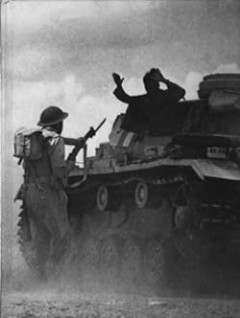
The War In The Desert / Richard Collier and The editors of Time-Life Books
- ครั้งที่จัดทำ
- 1
- ISBN/ISSN
- -
- ลักษณะวัสดุ
- 208 p. : ill. ; 29 cm
- ชื่อชุด
- -
- เลขหมู่
- 940.54 C689W
- ครั้งที่จัดทำ
- 1
- ISBN/ISSN
- -
- ลักษณะวัสดุ
- 208 p. : ill. ; 29 cm
- ชื่อชุด
- -
- เลขหมู่
- 940.54 C689W
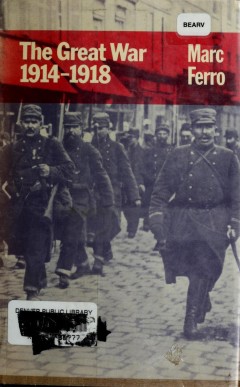
The Great War 1914 - 1918 / Marc Ferro
This radically new interpretation of the First World War and its causes, by one of the most brilliant of France's modern historians, reflects a new understanding of the nature of war, and its effects on society. Ferro sees the war as a natural response to pressures built into European society, and describes how revolutionary tension which was apparently submerged in 1914 burst out again in 1917…
- ครั้งที่จัดทำ
- 1
- ISBN/ISSN
- 071007574X
- ลักษณะวัสดุ
- xi, 239 p. : ill., ; 22 cm
- ชื่อชุด
- -
- เลขหมู่
- 940.54 F395G
 Computer Science, Information & General Works
  Philosophy & Psychology
  Religion
  Social Sciences
  ภาษา
ภาษา  Pure Science
  Applied Sciences
  Art & Recreation
  Literature
  History & Geography