Filter by

Maritime power and China's grand strategy / Anil Kumar Chawla
The Historical Context of China's Maritime Power -- The Evolution of China's Military Strategy -- The Evolution of China's Maritime Strategy -- China's Maritime Strategy in the South China Sea - A Case Study -- Strategy for Build-up of China's Comprehensive Maritime Power -- Maritime Dimension of the Belt and Road Initiative
- ครั้งที่จัดทำ
- 1
- ISBN/ISSN
- 9781032803630
- ลักษณะวัสดุ
- xii, 202 p. : ill., maps ; 24 cm.
- ชื่อชุด
- -
- เลขหมู่
- 359.00951 C512M 2025
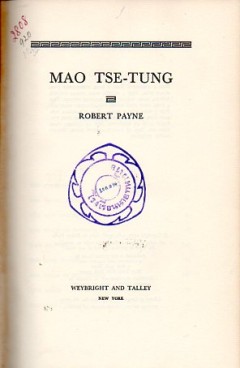
Mao Tse-Tung / Robert Payne
- ครั้งที่จัดทำ
- 4
- ISBN/ISSN
- -
- ลักษณะวัสดุ
- vi, 343 p. : ill., maps ; 24 cm
- ชื่อชุด
- -
- เลขหมู่
- 920 M32
- ครั้งที่จัดทำ
- 4
- ISBN/ISSN
- -
- ลักษณะวัสดุ
- vi, 343 p. : ill., maps ; 24 cm
- ชื่อชุด
- -
- เลขหมู่
- 920 M32

China through the sliding door : Reporting three decades of change / John Git…
Rise and fall of the Red Guards - Mao Zedong's last years - New Rural Revolution - Renewal of urban China - 1983-1989 - Beijing Massacre - Tibet, 1989-1994 - Cultural stirrings after Mao - Deng - Return of Hong Kong to China
- ครั้งที่จัดทำ
- 1
- ISBN/ISSN
- 9780684851815
- ลักษณะวัสดุ
- 280 p. : ill., maps ; 20 cm
- ชื่อชุด
- -
- เลขหมู่
- 915.1 G536C

A short history of Chinese communism, completely updated / Fu-wu Hou
- ครั้งที่จัดทำ
- 1
- ISBN/ISSN
- 0138094187
- ลักษณะวัสดุ
- x, 278 p. ; 21 cm
- ชื่อชุด
- -
- เลขหมู่
- 915.1035 H839S
- ครั้งที่จัดทำ
- 1
- ISBN/ISSN
- 0138094187
- ลักษณะวัสดุ
- x, 278 p. ; 21 cm
- ชื่อชุด
- -
- เลขหมู่
- 915.1035 H839S

China's new Navy : The evolution of plan from the people's revolution to a 21…
"The book tells the story of successive generations of Chinese naval officers and sailors with modernization as the central theme and patterns of their operational behavior. The unique characteristics influence naval reforms amid political loyalty. The way the Chinese Navy both carried on longstanding traditions while made remarkable changes was crucial to building a "rich country with a strong…
- ครั้งที่จัดทำ
- 1
- ISBN/ISSN
- 9781682477755
- ลักษณะวัสดุ
- 285 p. : ill., map ; 24 cm.
- ชื่อชุด
- -
- เลขหมู่
- 359.030951 L693C 2023

The Mekong : Turbulent past, uncertain future / Milton E. Osborne
The Mekong is one of the world's great rivers, and by far the largest in Southeast Asia. Empires have risen and fallen in the lands through which the Mekong flows, and it has been linked to remarkable adventure and exploration as well as war and massacre. Now that Indochina is at peace, new dangers threaten the river's future. For more than forty years Milton Osborne has been fascinated by the …
- ครั้งที่จัดทำ
- 1
- ISBN/ISSN
- 9781865082196
- ลักษณะวัสดุ
- xvi, 295 p. : ill. ; 24 cm
- ชื่อชุด
- -
- เลขหมู่
- 959 O81M

Travels on the Mekong : Cambodia, Laos, and Yunnan : The political and trade …
- ครั้งที่จัดทำ
- 2
- ISBN/ISSN
- 9789748496313
- ลักษณะวัสดุ
- xxv, 365 p. : ill. ; 21 cm
- ชื่อชุด
- -
- เลขหมู่
- 959 D278T
- ครั้งที่จัดทำ
- 2
- ISBN/ISSN
- 9789748496313
- ลักษณะวัสดุ
- xxv, 365 p. : ill. ; 21 cm
- ชื่อชุด
- -
- เลขหมู่
- 959 D278T

Popular protest and political culture in modern China : Learning from 1989 / …
A reconsideration of contemporary Chinese society and politics since the Tiananmen Square massacre in June 1989. The book emphasizes the need to understand the vital role that a culture plays in shaping political action.
- ครั้งที่จัดทำ
- 1
- ISBN/ISSN
- 0813380316
- ลักษณะวัสดุ
- xi, 300 p. ; 22 cm
- ชื่อชุด
- -
- เลขหมู่
- 951.058 W322P

Studies in the Social History of China & South - East Asia : Essays in memory…
This 1970 memorial volume is a tribute to the wide range of Victor Purcell's scholarly interests, especially on the Chinese people and their history and civilisation, by friends, colleagues and former pupils. It aims primarily to acknowledge his work as a scholar and focuses on insurrection, immigration and trade in China and South-east Asia.
- ครั้งที่จัดทำ
- 1
- ISBN/ISSN
- 521074525
- ลักษณะวัสดุ
- vii, 423 p. ; 22 cm
- ชื่อชุด
- -
- เลขหมู่
- 951.082 C518S
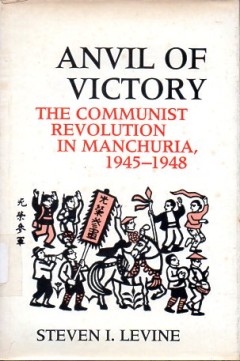
Anvil of victory : the Communist revolution in Manchuria, 1945-1948 / Steven …
- ครั้งที่จัดทำ
- 1
- ISBN/ISSN
- 0231064365
- ลักษณะวัสดุ
- xi, 314 p. : ill., maps ; 23 cm
- ชื่อชุด
- -
- เลขหมู่
- 951.8042 L665A
- ครั้งที่จัดทำ
- 1
- ISBN/ISSN
- 0231064365
- ลักษณะวัสดุ
- xi, 314 p. : ill., maps ; 23 cm
- ชื่อชุด
- -
- เลขหมู่
- 951.8042 L665A
 Computer Science, Information & General Works
  Philosophy & Psychology
  Religion
  Social Sciences
  ภาษา
ภาษา  Pure Science
  Applied Sciences
  Art & Recreation
  Literature
  History & Geography